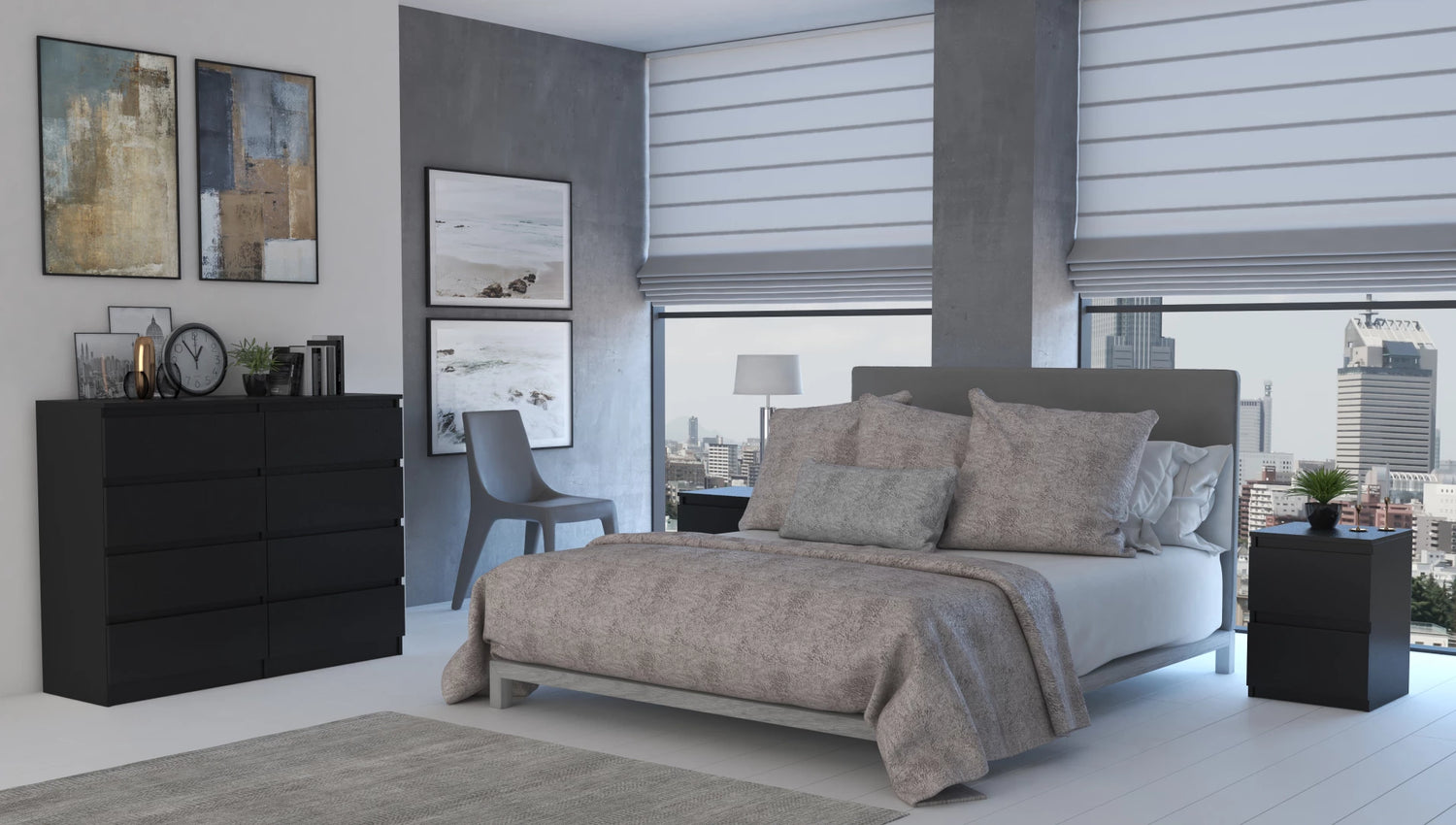


Why the Right Chest of Drawers Matters
Let’s be honest—when we think about furnishing a room, the humble chest of drawers rarely gets top billing. We obsess over sofas, we debate dining tables, we daydream about beds. But the chest of drawers? It’s often an afterthought. And yet, in daily life, few pieces work harder. It stores the bits we don’t want on show, tidies away everything from socks to tech clutter, and offers a surface for styling or essentials. Quietly, it becomes one of the most-used items in the entire home.
The problem is, many of us buy the wrong one. Too short, too deep, not enough drawer space, or flimsy construction that starts to sag after a few months. And that’s often because we don’t ask the right questions before buying. What will we use it for? How much clearance do we actually have? Should it complement the bed or contrast with it? Is there a difference between a wide dresser and a tallboy, and which one makes more sense in a smaller UK bedroom?
We created this guide to help you answer exactly those questions—and a few more you may not have considered. Because when we choose a chest of drawers intentionally, it does more than hold our clothes. It streamlines our routines, elevates the room, and lasts long enough to move house with us (and still look the part when it gets there).
Whether you’re furnishing a master bedroom, creating storage for a growing child, or simply trying to find a practical yet stylish piece for a narrow hallway, this guide will walk you through all the key factors: from measurements and drawer layout to materials, styles, and finish. We’ll explore the difference between solid wood and veneer, what to expect from soft-close drawers, and how to get the most value for your money—without compromising on looks.
Get the Tape Measure Out First
Before falling in love with a design, measurements should come first. Size and clearance decide whether a chest of drawers will actually work in your space day to day.
Key points to consider:
-
Measure the footprint, not just the unit:
Always account for handles, drawer pull-out depth, and surrounding furniture.
-
Walking clearance matters:
Allow 60–80 cm of free space in front of drawers so they can open comfortably without blocking walkways.
-
Think about room flow:
Avoid placing drawers where open drawers clash with beds, doors, or radiators.
-
Drawer extension is crucial:
Full-extension runners make deeper drawers far more usable and prevent items getting lost at the back.
-
Measure twice (or three times):
A chest that technically fits but feels tight will quickly become frustrating.
Home Hub Tip: If space is tight, choose drawers with recessed or integrated handles. They reduce the overall depth and make movement around the piece much easier in narrow bedrooms or hallways.
Standard Sizes vs Tallboys vs Wide Dressers
Let’s talk proportions. Most chests of drawers in the UK fall into three main types: standard, wide, and tallboy. Each one serves a different purpose, and the right choice depends on both your available floor space and how you intend to use it.
A standard chest of drawers typically measures around 80 to 100 cm in width and 70 to 90 cm in height. This size is ideal for medium-sized bedrooms, offering a good balance between surface area and storage without dominating the space.
Wide dressers, often spanning 120 to 160 cm or more, are best for larger rooms or for those of us who need substantial storage. These pieces tend to be lower in height, which makes them perfect under mirrors or as an anchor piece on a long wall. They can also double as a TV stand or sideboard in open-plan spaces.
On the other hand, tallboys (also known as highboys) are narrower in width but stack vertically, often with five or six drawers. They’re a brilliant choice for tighter rooms or narrow alcoves where floor space is limited but vertical clearance is available. A tallboy is also a great secondary storage piece if you already have a wardrobe or large dresser.
Choosing the right type isn’t just about aesthetics—it’s about how your furniture integrates with your life. If your bedroom is compact, going up rather than out makes practical sense. If you share a room or want a dual-purpose surface, a wider unit might offer more flexibility.
Explore our Chest of Drawers - from compact tallboys to wide dressers designed for real UK bedrooms and everyday storage needs.
Clearance Space and Drawer Pull-Out Depth
Once you’ve chosen your style, it’s time to look at how it functions within the room. The full footprint of a chest of drawers includes more than its listed dimensions. You’ll also need to account for clearance space—both around it and in front of it.
Allow for at least 60–80 cm of walking space in front of the drawers, especially in bedrooms where it might face the bed. If it’s near a doorway, make sure opening a drawer doesn’t block access or become an obstacle. And remember that handles can add 2–3 cm of depth to the listed measurement, so double-check your available space.
Drawer extension is another crucial detail. A fully loaded drawer that only opens halfway is a constant irritation. Look for smooth-gliding runners that allow full extension—especially in deeper drawers—so you’re not digging in the dark for that one item that always ends up at the back.
Proper clearance and movement aren’t just about convenience. They directly affect how usable your storage is on a day-to-day basis. A chest that looks perfect on paper but feels cramped in your room will quickly become a regret. So measure twice. Maybe even three times.

Storage Needs: Drawers, Compartments & Clever Extras
Not all drawer space works the same way. Internal layout is what determines whether a chest of drawers feels intuitive—or awkward—over time.
What to look for inside:
-
Drawer depth variation:
Deep drawers (18–22 cm) for knitwear or bedding, shallower ones (10–12 cm) for accessories and tech.
-
Mixed drawer layouts:
Smaller drawers at the top, larger ones below mirror how we actually store clothes.
-
Drawer width balance:
Narrower drawers reduce overfilling, wider drawers suit organisers and inserts.
-
Hidden compartments:
Ideal for jewellery, watches, documents, or valuables you want tucked away discreetly.
-
Built-in organisers & trays:
Felt-lined inserts or removable trays improve organisation without extra purchases.
Hidden Compartments and Built-In Organisers
The best chests of drawers don’t just store—they enhance how we store. And in recent years, clever internal features have made a quiet but impressive evolution. If you’ve ever wished for a velvet-lined space for jewellery or a discrete place to charge a tablet overnight, you’re not alone.
Some designs now offer hidden compartments—shallow upper drawers with dividers for watches, glasses or other valuables. Others feature removable trays or built-in felt inserts that allow you to keep items separate and protected. There are even models with discreet cable management systems, turning one drawer into a mini charging station. Perfect for those of us who like to keep phones and tablets out of sight but within reach.
Style & Aesthetics: Matching Your Room Without Over-Coordinating
Once we’ve covered the size and storage, it’s time to consider the part that usually grabs our attention first: style. A chest of drawers isn’t just a utility—it’s a design anchor. Whether it sits in the bedroom, hallway, or guest room, it has the power to elevate or disrupt the entire space depending on how well it complements the overall look and feel of the room.
Choosing a style doesn’t mean copying a catalogue. It means understanding how different design elements—shape, leg height, finish, and hardware—can either echo your existing décor or gently offset it to create contrast and interest.
Discover our Bedroom Furniture - thoughtfully designed pieces that work together without feeling overly matched.
Classic Shaker, Mid-Century or Modern Minimal?
Let’s start with form. The Shaker style, with its timeless clean lines and slightly inset panels, works beautifully in traditional or transitional interiors. It feels grounded, calm and purposeful—perfect if you’re trying to bring a sense of order and balance to a busy bedroom or hallway.
For something a bit more expressive, mid-century modern options bring in tapered legs, warm wood tones like walnut or teak, and rounded corners. These pieces work especially well in homes where you want to blend vintage influences with contemporary comfort.
Then there’s the modern minimal approach: flat-fronted drawers, integrated handles, clean profiles, and blocky symmetry. These dressers are all about simplicity and geometry, offering a quiet visual presence that doesn’t demand attention but still feels intentional.
Your choice of silhouette will have a noticeable effect on the room’s energy. Taller, narrower dressers feel upright and architectural; wider, lower designs give a grounded, relaxed feel—especially in a larger room where you want to avoid visual clutter.
Colour Strategy: Painted, Stained or Natural Wood Grain
Beyond shape, colour and finish are what really tie the dresser into its environment. Painted chests in off-white, charcoal or sage green can either stand out as accent pieces or blend into a soft, tonal scheme. They’re great for injecting a bit of colour without overwhelming the room.
If your room already has plenty of bold colour or pattern—say, a statement wall or patterned bedding—you might lean towards a natural wood finish. Oak, walnut, or ash brings warmth and tactility, grounding the space while letting bolder elements shine.
Stained woods offer a beautiful middle ground. They maintain the visible grain of natural wood while introducing a tone—rich chestnut, dark espresso, or warm honey—that adds personality. These are especially useful in rooms where the flooring or other furniture already includes a mix of wood tones. A stained piece can often act as a bridge, pulling the scheme together without forcing exact matches.
The real trick is knowing whether your chest should blend in or break the mould. If the room is already layered with texture and detail, a subtle, complementary finish will help maintain balance. If the space is more restrained, a bolder piece can add that missing focal point.
Home Hub Tip: If your chest of drawers is visually bold, keep the styling minimal. One lamp, one tray, one decorative object is often enough to let the piece shine without clutter.
Materials & Build Quality: More Than Just Looks
Now let’s get into what really separates a beautiful dresser that lasts from one that’s only surface-deep: materials and craftsmanship. It’s easy to get swept up in styling details or colour, but if the drawers don’t run smoothly or the finish chips within a year, it won’t matter how good it looked on day one.
This section is all about helping you shop smart and informed—so you know what to expect, what to check for, and what’s worth investing in.
Discover our Bestsellers - thoughtfully designed pieces that work together without feeling overly matched.
Solid Wood vs Veneer vs Engineered Boards
There’s a lot of confusion around furniture materials, especially when everything is described as “wood.” But not all woods are equal—and understanding the differences helps you make a choice that suits both your budget and your expectations.
Solid wood, as the name suggests, means the piece is made entirely from one type of wood—like oak, pine or ash. It’s strong, durable, and ages well. You’ll often find natural grain variation, which gives each piece character. Solid wood tends to hold up better to daily use, especially when paired with strong joinery like dovetail drawers. The trade-off? It’s heavier and generally more expensive.
Veneer furniture uses a thin layer of real wood bonded to a base material, usually MDF or plywood. Done well, it offers the look and feel of real wood but at a lower price point. Veneers can also be more stable in fluctuating temperatures and humidity, which can be a plus in older UK homes. Just make sure the veneer is thick enough to withstand daily wear.
Then we have engineered boards like MDF and chipboard. These are more affordable and lightweight but tend to fall short on durability if the build quality isn’t high. If you’re buying a dresser made entirely from these materials, check that the edging is sealed properly and that the drawers are well-supported to avoid sagging over time.
The best approach? If your budget allows, invest in solid wood for pieces that will see daily use. If you’re styling a guest bedroom or need a lighter option, a well-made veneered piece from a reputable brand can still perform beautifully.
Drawer Mechanisms: Soft-Close, Metal Runners & Dovetail Joints
How a drawer is built affects longevity just as much as materials or style.
Quality indicators to check:
-
Soft-close runners:
Prevent slamming, protect joints, and add a refined feel—especially useful in family homes.
-
Metal runners over plastic:
Smoother movement, quieter operation, and better long-term durability.
-
Full-extension mechanisms:
Allow access to the entire drawer depth without digging.
-
Dovetail joints:
Interlocking construction that holds up under heavy, daily use.
-
Stable drawer bases:
Reinforced bases prevent sagging over time, even when fully loaded.