

Small Space, Big Potential
Living small in the UK is no longer a compromise—it’s a lifestyle choice we’re embracing with enthusiasm, creativity, and a good dash of design flair. Rising house prices and compact new-builds mean many of us work with fewer square metres than our parents ever did, yet we still want homes that feel open, organised, and deeply personal. That balance doesn’t arrive by accident; it comes from smart storage choices that allow every chair, shelf, and side table to earn its keep. When we talk about storage for small spaces, we’re really talking about how to make a modest footprint feel generous—how to keep the things we love close by without letting them take over.
The first step is a mindset shift. Instead of seeing a studio flat, a box bedroom, or a narrow hallway as a limitation, we start to view it as an opportunity to curate. In a small home, nothing gets to be “just decorative” or “just practical”; pieces must do both, often at the same time. That’s why ottoman beds, wall-mounted desks, and slimline consoles are more than trends; they are essential tools in the space-saving arsenal. By analysing how we move through each room—where the morning rush bottlenecks, where mail piles up, where shoes congregate—we uncover pockets of untapped potential. A blank stretch of wall becomes vertical shelving. An awkward alcove turns into a built-in cupboard. A coffee table hides board games and blankets beneath a lift-up top. Each micro-decision inches us closer to a clutter-free, breathable home.
Start With the Layout: Make the Space Work Harder
Before we even think about buying furniture or adding more storage, we need to look at how our space is currently working—or not working—for us. In a small home, clever layout can be the difference between a room that feels open and calm, and one that feels cramped and chaotic.
-
Spot the friction points:
Are you stepping around furniture to reach a window? Is a wardrobe door blocked by the bed? Are drawers stuck half-open because there’s no clearance?
-
Create simple zones:
Define areas for sleeping, relaxing, eating, or working so furniture doesn’t “float” without purpose.
-
Fine-tune, don’t overhaul:
Moving a chair by ten centimetres can open up a walking route or allow a drawer to fully extend.
-
Use vertical space strategically:
Tall, slim bookcases and wall-mounted shelves add storage without stealing floor space—especially useful in narrow hallways and compact kitchens.
-
Store upward with intention:
A single high shelf above a doorway or window can hold occasional items, keeping everyday storage lower and more accessible.
When the flow of the room feels natural, storage starts to support real habits—not just fill gaps. Done right, vertical choices also make the room feel taller, lighter, and more open even if the footprint stays the same.
Home Hub Tip: Store by frequency, not by category. Items you use every day should live between waist and eye level. Reserve higher shelves for seasonal or occasional items—this keeps daily routines smooth and prevents clutter creeping back into your main living zones.
Choose Furniture That Does More Than One Job
In small homes, every piece should work twice as hard. This doesn’t mean gimmicks—it means considered, multifunctional items that quietly earn their keep while still looking good.
-
Storage benches for busy hallways:
A bench is useful, but a storage bench with lift-up seating gives you a place to sit and a hidden home for boots, umbrellas, or pet leads.
-
Ottomans and footstools with hidden space:
Perfect for throws, board games, magazines, or tech clutter—while still functioning as a footrest or occasional coffee table.
-
Extendable tables for flexible living:
Keep weekday dinners compact, then expand when guests arrive—ideal for kitchen-diners and open-plan living.
-
Folding desks and wall-mounted drop-leaf tables:
Create a workspace that disappears when the working day ends, keeping the room visually calm.
-
Nesting tables for fluid layouts:
Slide together when not needed and separate only when you’re entertaining—great for small living rooms.
The goal isn’t to compromise—it’s to make sure your furniture matches the rhythm of your day, without demanding more space than you can give.
Home Hub Tip: Always leave 10–15% of your storage empty. Overfilled storage quickly becomes chaotic. A little breathing room makes it easier to stay organised—and gives you flexibility as your needs change.
Storage Benches, Ottomans and Footstools
Let’s take the hallway as an example. A bench where we sit to take off our shoes is useful. But a storage bench, with lift-up seating and space for boots, umbrellas or pet leads inside? That’s design that respects how we live.
The same goes for the living room. An ottoman that hides throws or board games but still functions as a footrest or coffee table gives us multiple uses in one. Footstools with hidden storage are perfect for tucking away remote controls, books or magazines—especially when every inch of floor is precious.
These soft-storage pieces also help soften the look of a space, bringing texture and shape without visual heaviness. And because they blend into the background, they support a calm and cohesive aesthetic without screaming for attention.
Explore our Living Room Storage Furniture - from coffee tables with hidden compartments to TV units and sideboards that keep everyday clutter out of sight.
Extendable Tables, Folding Desks and Nesting Furniture
Working from home in a one-bedroom flat? You’re not alone. That’s why furniture that adapts to different moments of the day has become essential.
An extendable dining table means weekday dinners for two don’t overwhelm the space—but there’s room for guests when needed. Folding desks or wall-mounted drop-leaf tables offer workspace that disappears when the working day ends. Nesting side tables slide neatly together and separate only when required—keeping your living area flexible and fluid.
The goal isn’t to compromise. It’s to make sure our furniture serves the full rhythm of our day—from breakfast through to evening downtime—without needing more space than we can give.
Beds With Built-In Drawers or Lift-Up Storage
No room offers more hidden potential than the bedroom. And no item works harder than the bed. If we’re not using the space beneath it for storage, we’re missing out on a vast and valuable area.
Beds with built-in drawers offer a natural place for extra bedding, off-season clothes or spare towels. Opt for soft-close mechanisms or smooth-glide runners to make access easier, especially in tighter bedrooms. If you prefer a cleaner look, a lift-up storage bed gives full access to the under-bed cavity, without visible drawers at all.
These features don’t just make the bed more functional. They let us eliminate the need for extra chests or wardrobes—freeing up floor space and making the bedroom feel larger and calmer.
Explore our Bedroom Storage Furniture designed to keep small bedrooms calm, organised, and clutter-free - without sacrificing style.

Clever Hallway & Entryway Storage Ideas
The hallway is often the first thing we see when we walk through the door—and the first place to descend into chaos. UK hallways aren’t known for their generous proportions, but with the right pieces they can become one of the most efficient storage zones in the home.
-
Slimline shoe cabinets:
Look for designs around 18–24cm deep that sit flush to the wall—narrow enough to keep the space navigable, but roomy enough for everyday pairs.
-
A narrow console with a drawer or shelf:
Ideal for keys, wallets, post, and chargers—so clutter doesn’t migrate into the kitchen or living room.
-
Wall hooks that work for everyone:
A simple row handles coats, bags, and scarves without taking floor space—install at heights that suit adults and children.
-
Mirror cabinets for hidden storage:
Reflect light, make the hallway feel bigger, and conceal sunglasses, gloves, or dog leads behind a clean front.
-
Above-door shelves for seasonal overflow:
Use that high wall space for items you don’t need daily—hats, scarves, suncream, or spare accessories.
Done well, the hallway stops being a dumping ground and becomes a calm landing zone—functional, tidy, and easy to maintain.
Discover our Hallway Solutions - from slimline shoe cabinets to multifunctional benches built for compact UK homes.
Room-by-Room Storage Tips Without Sacrificing Style
Storage isn’t a one-size-fits-all solution. What works in the hallway won’t always work in the bedroom, and the living room has a whole different rhythm again. That’s why, when we think about storage for small homes, we need to take it room by room—finding the sweet spot between function and feel, and making sure nothing feels purely practical or purely decorative. In a small space, everything must carry a bit of both.
Living Room
Let’s start with the space where we unwind. The living room has a tendency to collect stuff: remotes, books, throws, devices, toys. It’s where function and mess collide, and where thoughtful storage can genuinely change how we feel in the space.
Look for coffee tables with hidden compartments or lift-up tops. These are brilliant for storing less-frequently used items while keeping the surface clear. A well-chosen TV unit should offer closed storage—not just shelves—so consoles, wires and spare remotes aren’t left on view. Consider sideboards that double as display units; they house everything from board games to candles but look clean and cohesive.
Try to mix open and closed storage to avoid the feeling of everything being shut away. Shelves styled with a few books and tactile objects break up the space and add softness. Keep styling minimal but meaningful—a small space doesn’t need more clutter disguised as décor.
Bedroom
In the bedroom, we want calm—but we also need practicality. That tension is real, especially when we’re working with limited floor area. It’s why every storage decision here should be led by one question: can this do more than one thing?
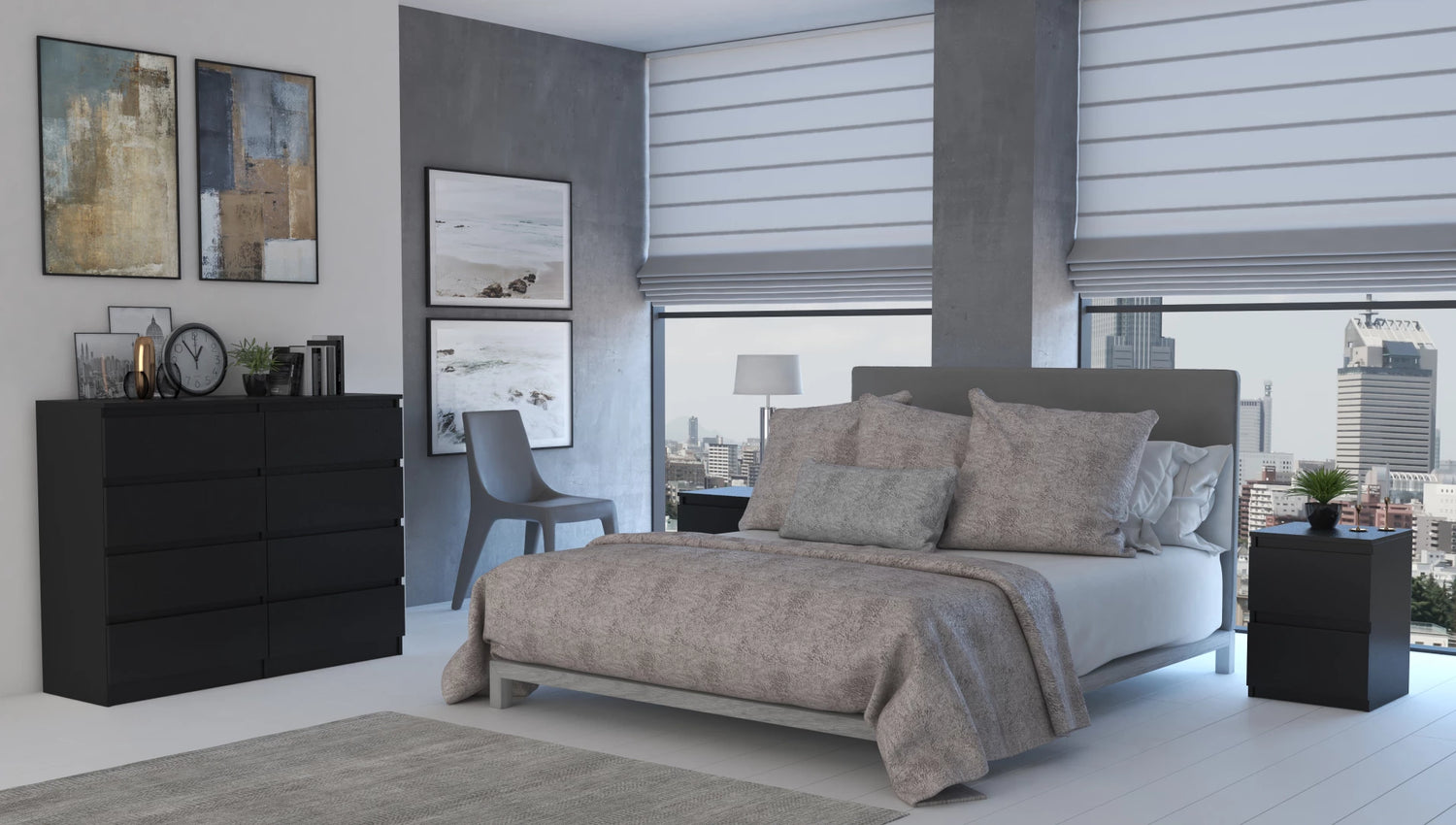
A tallboy chest of drawers can offer five or six deep drawers in the footprint of a side table. Go for models with full-extension runners so nothing gets lost at the back. Opt for a bedside table with drawers rather than open shelving—it keeps nighttime chaos hidden, not displayed.
Under-bed storage is essential in small bedrooms. Either choose a frame with integrated drawers, or invest in fabric boxes that slide beneath with ease. Bedding, out-of-season clothes, even spare towels all live here quietly and accessibly.
Wall-mounted lighting is another tip—freeing up surface space without losing ambience. The less you need to store on top of furniture, the more peaceful the room feels.
Kitchen and Dining
Finally, let’s talk about the busiest zone in most homes. The kitchen and dining space often overlap in smaller properties, and both are vulnerable to surface clutter if storage is lacking.
A freestanding sideboard or console can bridge the gap—holding everything from table linens to extra crockery, without needing wall fixings. If you’re working with a kitchen that lacks cabinetry, a freestanding trolley with wheels is a game-changer. It offers prep space, utensil storage, and can even move into a corner when not in use.
Wall-mounted shelves or racks are perfect for glassware or spices, especially above a breakfast bar or small dining nook. Look for slim profiles and materials that match the rest of your palette—metal, wood, or even painted finishes to echo your cabinetry.